From Price Tags to Real Choice
Exploring Everyday Food Access in Utrecht
Hi, I am Kenechi Ofomah, a Master’s student in Food Systems Innovation at Aeres University of Applied Sciences in Almere. For my cross-over internship with Duurzaam Utrecht 2030, I am exploring how sustainable Turkish and Moroccan supermarkets are compared to the large chain grocery stores, focusing especially on the shopping experiences of people with lower incomes in Utrecht.
Food is not only a matter of nutrition or pricing. It is also about identity, culture, social belonging, and making the best choices you can within your income. Before starting my own research, I spent time reading and reflecting on two earlier student projects. Their work helped shape how I am approaching this topic.
Lessons from earlier student work
The first project I reviewed looked at improving access to sustainable groceries for people with low incomes. What stood out to me was the realistic mindset. Instead of waiting for big policy changes, it encouraged practical collaboration with local retailers and community groups. The aim was to make sustainable food options more affordable now, not someday in the distant future.
The second project focused on Kanaleneiland and involved distributing grocery vouchers and speaking directly with residents from different cultural backgrounds. People were able to share their thoughts about healthy eating, price barriers, and cultural food habits in a respected and inclusive setting. The responses were collected through conversations, not just survey boxes. I really appreciated that approach because it treats food experiences as lived realities rather than statistics.
Both projects reminded me that discussions about sustainability become meaningful only when they are grounded in real human lives.
Why I chose to study Turkish and Moroccan supermarkets
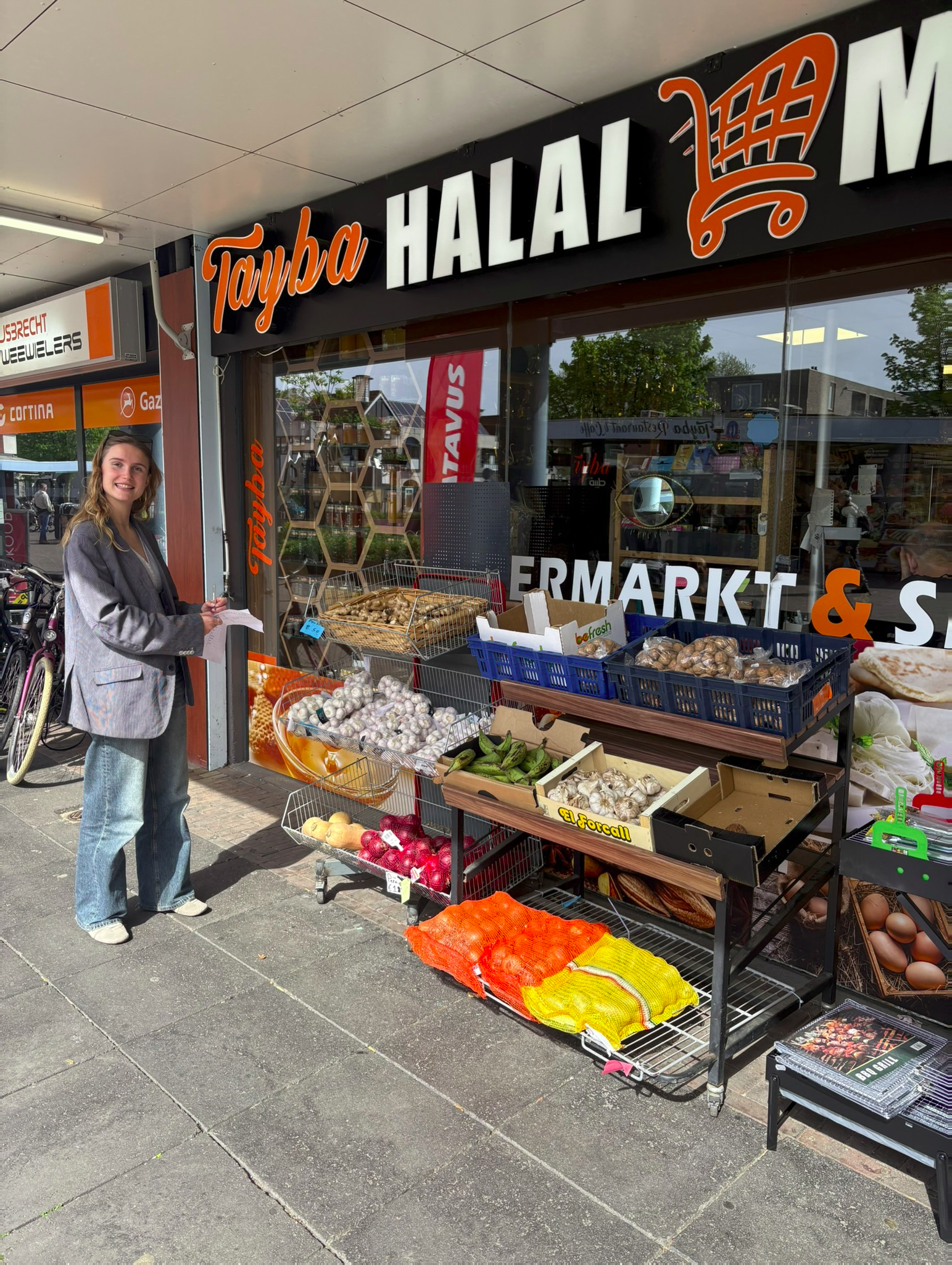
Many residents in Utrecht, especially in neighbourhoods like Kanaleneiland, shop regularly at Turkish and Moroccan supermarkets. These stores often offer good prices, fresh vegetables and fruits, culturally familiar ingredients, and an environment where people feel at home. I am interested in how these shops already support sustainability and where there might be opportunities for improvement.
My focus will look at different aspects of the shopping experience, including:
● the amount of packaging used for produce
● how products are sourced and transported
● how shop owners manage food that is not sold
● whether buying fresh and loose produce naturally reduces waste
● how cultural shopping habits shape sustainability in daily life
I will combine observation inside the shops with conversations with customers and store owners. My intention is not to judge or criticize but to learn and understand.
Why this work matters to me
I chose this topic because I care about sustainability that is truly inclusive. If sustainability is only available for people with high incomes, then it is not real sustainability. I believe the future of food systems should be one where good food is accessible, culturally meaningful, and environmentally responsible for everyone.
This topic also connects to my own values. Food is part of who we are. It carries memories, traditions, recipes, and comfort. I am very interested in how everyday sustainable habits may already exist in these neighbourhood supermarkets, even if they are not formally labeled or certified.
Where I hope this leads
By the end of my internship, I hope to better understand what affordable sustainability looks like in practice. I want to see what is already working, where improvements might be possible, and how Duurzaam Utrecht 2030 can continue building long-term solutions that are realistic for both shoppers and shopkeepers.